
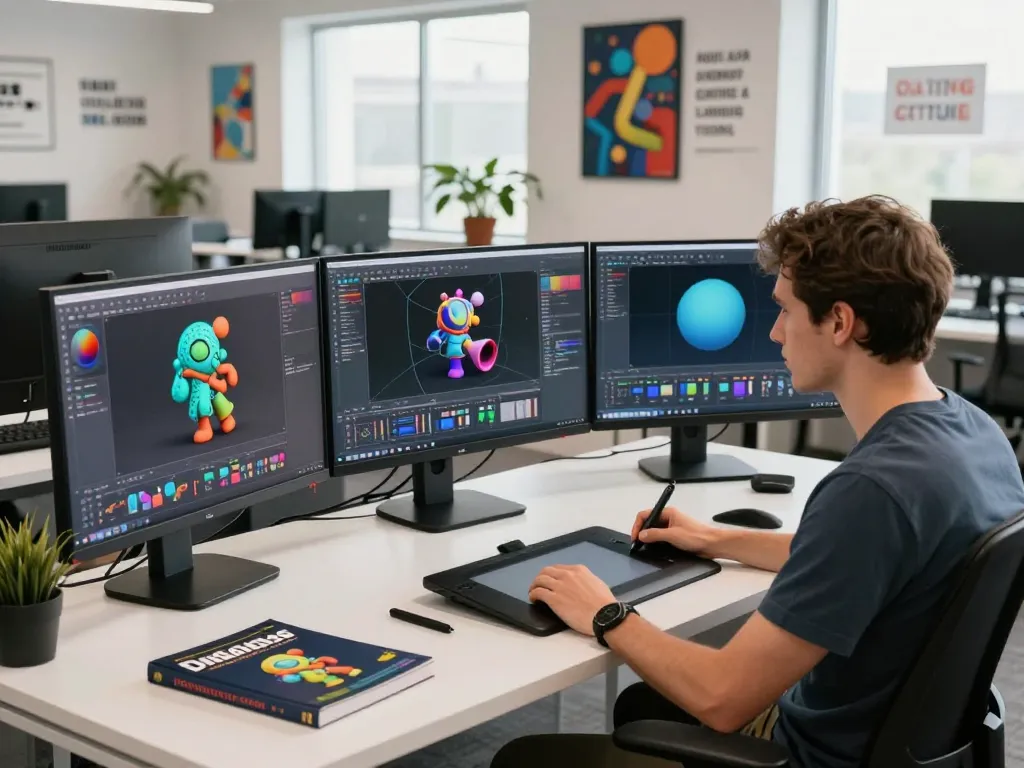

Understanding the Text to 3D Process
The advent of 3D modeling technology is revolutionizing the way artists, designers, and engineers create and interact with digital content. Among the latest innovations is the ability to generate intricate 3D models directly from textual descriptions. This capability, often referred to as Text to 3D, streamlines the creative process, allowing users to transform their ideas into visual representations with ease. This article will explore how this technology works, its implications for digital artistry, and the tools available for creators looking to harness its potential.
What is Text to 3D Technology?
Text to 3D technology uses artificial intelligence (AI) to interpret textual prompts and convert them into three-dimensional models. Unlike traditional modeling techniques, which require experience and technical skills, this technology simplifies the process by allowing anyone with a basic understanding of language to generate 3D content. At its core, this technology leverages deep learning algorithms and neural networks to analyze context, identify shapes, and create detailed models that align with user specifications.
How Text to 3D Transforms Digital Art
Digital artists gain unprecedented flexibility and creativity through Text to 3D technology. Artists can express complex concepts with simple phrases, leading to unique interpretations that might not emerge from conventional modeling practices. For instance, a prompt such as “a futuristic city skyline at sunset” can yield a stunning visual representation, complete with intricate architectural details and ambient lighting effects. This transformation not only accelerates the design process but also provides a new medium for artistic expression.
Key Tools and Software for Text to 3D Generation
Several platforms have emerged to facilitate the Text to 3D experience. Tools like HexaGen, Meshy AI, and Sloyd offer user-friendly interfaces that allow creators to input text prompts and receive optimized 3D models in seconds. These platforms vary in capabilities, with some targeting specific industries like gaming and animation, while others focus on broader applications. Understanding which tool aligns best with your creative needs is crucial for maximizing the benefits of Text to 3D technology.
Challenges in Text to 3D Model Creation
While the potential of Text to 3D technology is vast, it is not without its challenges. Users may encounter various pitfalls that can hinder the model creation process or result in unsatisfactory outputs.
Common Pitfalls in Text to 3D Implementation
One significant challenge lies in the ambiguity of textual descriptions. When prompts lack specificity, the generated models may not meet user expectations. For example, a vague instruction like “create an animal” could yield anything from a cat to a dragon, depending on the underlying algorithms’ interpretation. Hence, clarity in prompts is essential for achieving accurate representations.
Overcoming Design Limitations and Constraints
Another challenge is the inherent limitations of the AI models themselves. While technology has advanced significantly, some tools may struggle with complex geometry or nuanced designs. Users often find that iterative adjustments are necessary to refine models beyond their initial outputs. Engaging with the generated models and providing feedback through re-prompts can help achieve the desired results.
Addressing User Intent and Expectations
Understanding user intent is critical in Text to 3D applications. Designers must balance their creative goals with realistic outcomes the technology can produce. Educating users on the strengths and limitations of AI-generated content can help set appropriate expectations, leading to more fruitful creative processes.
Best Practices for Effective Text to 3D Models
To maximize the effectiveness of Text to 3D technology, creators should adopt specific strategies throughout their modeling efforts.
Crafting Precise Text Prompts for Quality Outputs
Crafting clear and detailed text prompts is essential for generating high-quality models. Instead of simple directives, users should incorporate descriptive adjectives, colors, and context. For instance, instructing the software to create “a glossy red sports car in a sunny urban environment” yields more precise results than merely stating “a car.”
Iterative Design: Refining Your 3D Models
Refinement is an integral part of the design process. After generating initial models, users should evaluate the outputs against their vision and provide further prompts to enhance details or correct issues. This iterative feedback loop allows for continual improvement and satisfaction with the final product.
Leveraging Feedback for Improved Results
Engaging with online communities and forums can provide valuable insights and suggestions from fellow creators. Sharing experiences, models, and feedback can refine personal techniques and foster a culture of collaborative growth within the Text to 3D space.
Real-World Applications of Text to 3D Technology
The application of Text to 3D technology spans various industries, proving to be a game-changer in many domains.
Case Studies: Successful Text to 3D Projects
Numerous businesses and creators have successfully implemented Text to 3D tools to enhance their workflows. For example, in the gaming industry, developers are using these tools to quickly prototype characters and environments, significantly reducing development time and costs. Similarly, educators incorporate this technology into their curricula to teach students about spatial design and 3D modeling fundamentals.
Industries Revolutionized by Text to 3D
Industries such as architecture, fashion, and entertainment have begun to embrace Text to 3D technology. Architects can visualize concepts directly from client descriptions, while fashion designers can bring their garment ideas to life without intricate CAD drawings. The flexibility and speed of generation enable rapid prototyping and testing, essential in today’s fast-paced market.
Future Trends in Text to 3D Applications
As AI technology continues to evolve, we can expect further advancements in Text to 3D applications. Enhanced machine learning capabilities will likely lead to improved understanding and generation of complex designs. Additionally, integration with virtual and augmented reality could create immersive experiences for users interacting with 3D content in real-time.
Tools and Resources for Aspiring Text to 3D Creators
For those looking to dive into the world of Text to 3D modeling, numerous tools, resources, and communities are available to aid in their journey.
Top Software Solutions for Beginners and Pros
Among the leading software solutions are Canva, Adobe Express, and Fast3D. Each platform offers unique features suited for different skill levels and creative goals. Beginners may prefer user-friendly interfaces like Canva, while seasoned professionals could benefit from the extensive capabilities of platforms like Fast3D for more complex projects.
Online Communities and Learning Resources
Online forums and social media groups provide valuable support and networking opportunities for aspiring creators. Platforms like Discord and Reddit have dedicated channels for 3D modeling discussions where users can share their experiences and learn from one another. Websites offering tutorials and courses can also be invaluable for skill development.
Performance Metrics for Evaluating Your 3D Models
To assess the quality of generated models, creators should consider various performance metrics. Factors such as visual fidelity, polygon count, and usability in intended applications can help evaluate success. Engaging with feedback through user testing can further refine models and ensure they meet user expectations.
What are the advantages of using AI for Text to 3D?
AI-driven Text to 3D technology offers numerous advantages, including speed, accessibility, and versatility. Users can generate models in seconds, making it feasible to brainstorm and iterate designs quickly. Additionally, this technology lowers barriers for those without extensive design backgrounds, enabling broader participation in 3D content creation.
How can I get started with Text to 3D modeling?
Getting started with Text to 3D modeling involves selecting an appropriate platform, crafting clear prompts, and practicing with different ideas. Many tools provide tutorials and templates to help users familiarize themselves with the process. Taking time to experiment with various prompts can yield insightful results and enhance model quality.
Are there free tools available for Text to 3D generation?
Several free tools exist for generating Text to 3D models, such as Fast3D and DreamFusion. While these platforms may offer limited features compared to premium options, they provide a solid foundation for newcomers looking to explore this technology without financial commitment.
What industries benefit the most from Text to 3D?
Industries such as gaming, education, architecture, and design stand to gain significantly from Text to 3D technology. The ability to swiftly generate models allows professionals to innovate and iterate without the constraints of traditional modeling techniques.
How does Text to 3D impact traditional modeling techniques?
Text to 3D technology complements traditional modeling techniques rather than replacing them. While it offers a quicker and more accessible method for creating models, traditional skills remain essential for refining and perfecting designs. The two approaches can work synergistically, enhancing the overall creative workflow.